

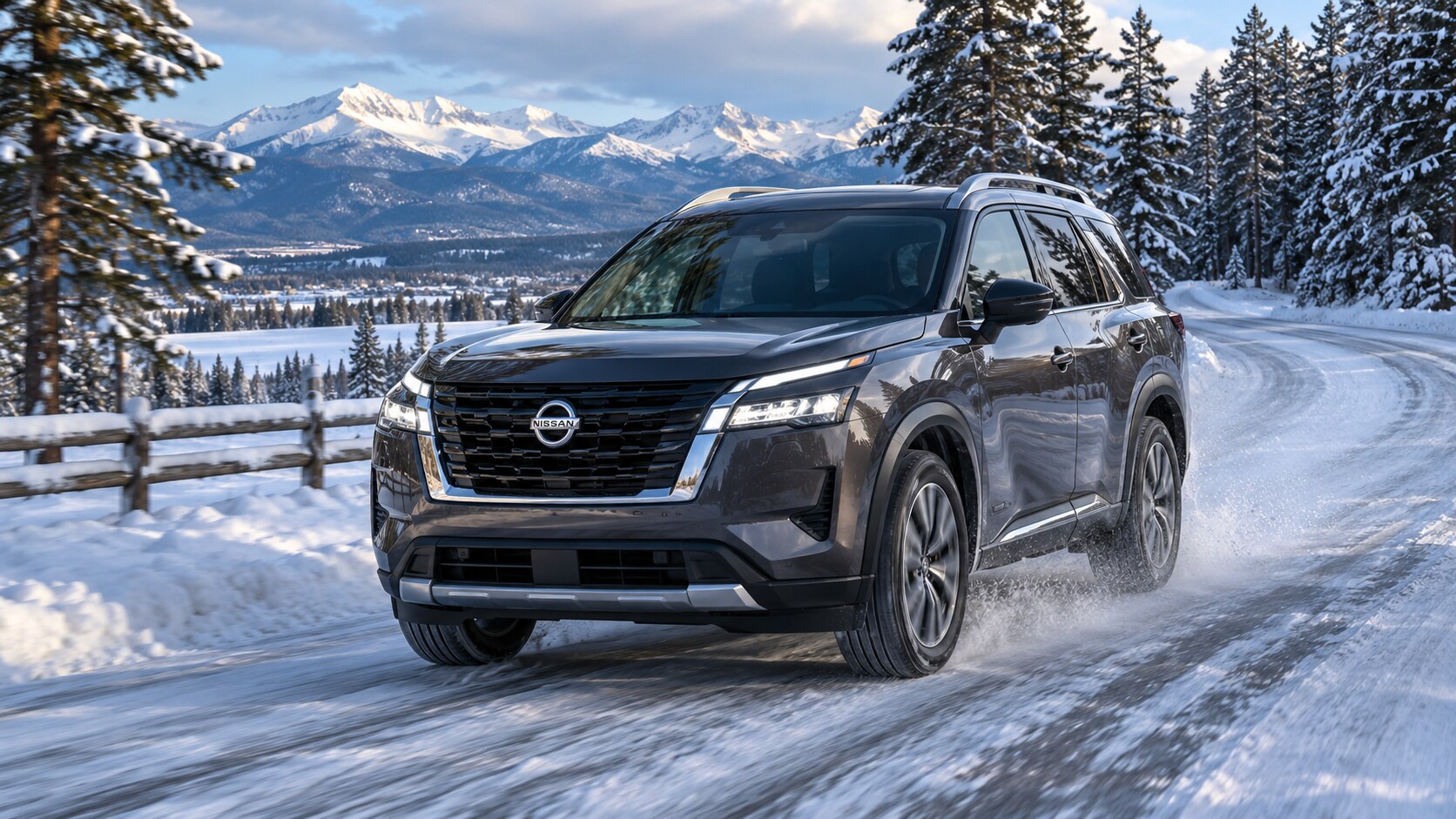
Winter Tires & Winter Service in Kalispell, MT
Snow can show up in the Flathead Valley long before the calendar says winter. Clark Nissan Kalispell helps drivers in Whitefish, Columbia Falls, Bigfork and Evergreen get tires, battery, brakes and fluids ready before the first storm.
Get Your Nissan Ready for a Flathead Valley Winter
Winter in Kalispell is not a short season you can wait out. Cold mornings arrive early, snow can stack up in the mountains while the valley floor stays bare, and a drive from Bigfork to Whitefish can cross three different road conditions in thirty minutes. The best time to prepare your vehicle is a few weeks before you need it, not the morning after the first storm.
This guide walks through the winter checklist we recommend to drivers across northwest Montana: tires first, then battery, brakes, wipers, fluids, lights and an emergency kit. It applies to any make and model, whether you drive a Rogue, a Frontier, a Pathfinder, a Murano or something else. Our service team at Clark Nissan Kalispell can inspect everything on the list in one visit.
Nothing here replaces your owner's manual. Always follow the maintenance schedule and fluid specifications for your exact vehicle, and ask a service advisor if you are unsure what your Nissan needs.
- Oct 1 – May 31Montana studded tire season
- 1 psi per 10°FRule-of-thumb tire pressure drop in the cold¹
- 3–5 yearsTypical battery life before testing becomes routine²
- 1 visitTires, battery, brakes and fluids checked together
Why Flathead Valley Drivers Winterize Early
Our winters are different from what most national winter-driving advice assumes. Distances are long, daylight is short, and help can be a long way off. Three local realities shape how we think about preparation.
Fast-changing roads
US-93 and US-2 can move from dry pavement to packed snow within a few miles, and mountain passes behave differently from the valley. Tires that grip in all of those conditions matter more than any single feature on the vehicle.
Long, rural miles
Many of our customers commute from Somers, Kila, Marion or Lakeside, or drive out to Hungry Horse Reservoir and the North Fork. A dead battery or worn wiper blade is an inconvenience in town. Out there it can be a real problem.
Short days, cold starts
When it is dark at the end of the workday and the temperature is below zero at dawn, your battery, lights, wipers and defroster do far more work than they do in July. Those are the parts we test first.
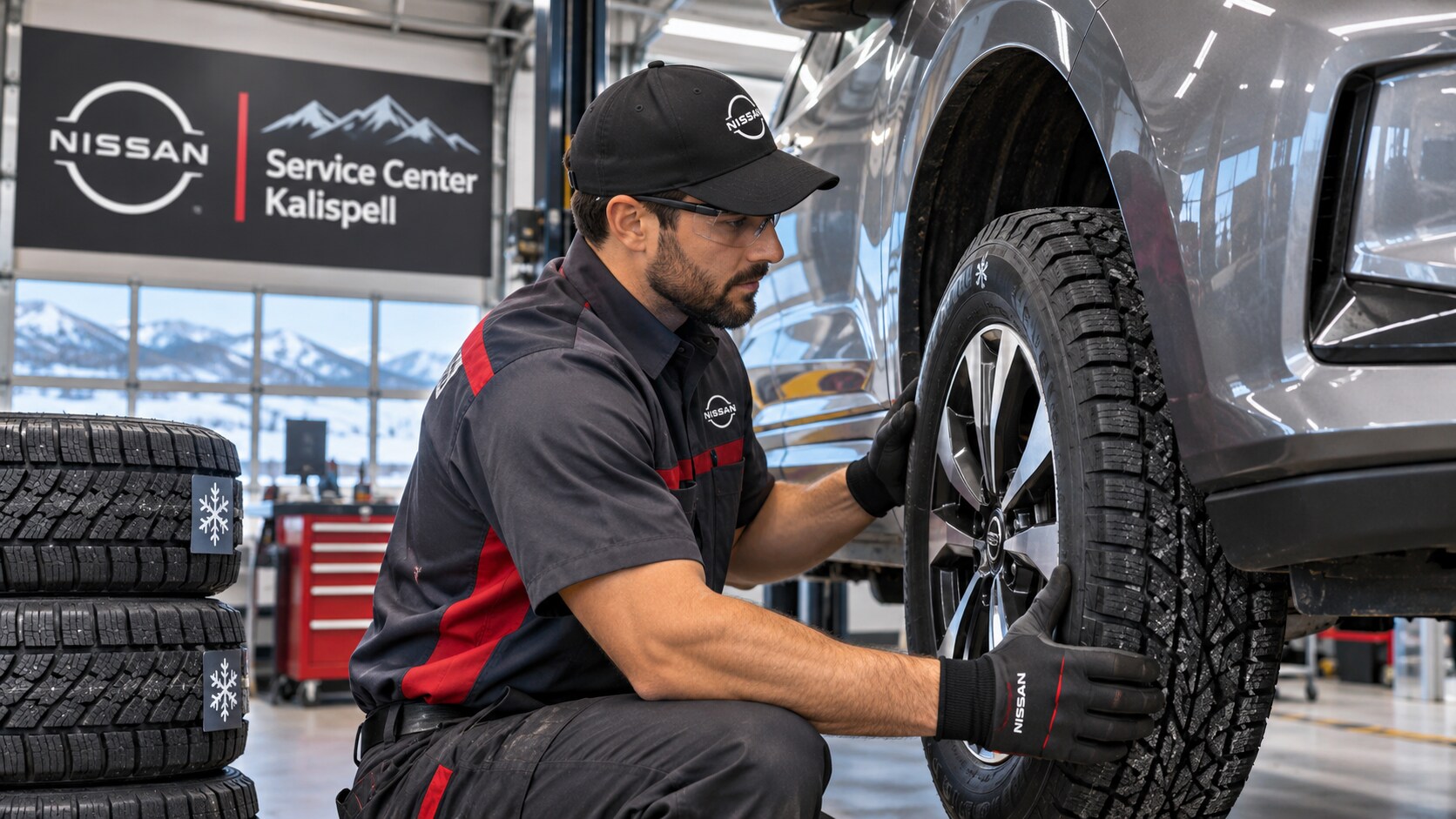
Choosing Winter Tires for Kalispell, MT
Tires are the only part of your vehicle that touches the road, which makes them the most important winter upgrade you can make. All-season tires are a compromise: they handle a wide range of conditions, but the rubber compound stiffens in sustained cold and the tread pattern is not designed to bite into packed snow and ice. Dedicated winter tires use a softer compound and deeper, siped tread built for those conditions.
Look for tires marked with the three-peak mountain and snowflake symbol, which indicates the tire has met a standardized snow-traction test. Studded tires are legal in Montana from October 1 through May 31, according to state guidance, and some drivers who face regular ice on hills or rural roads choose them. Studs help on ice, but they can be noisy on bare pavement and wear faster on dry roads, so many valley drivers go with a studless winter tire instead.
Whatever you choose, fit four matching tires. Mixing winter tires on one axle with all-seasons on the other can upset how the vehicle behaves under braking and in corners. All-wheel drive and four-wheel drive help you get moving, but they do not help you stop or turn any better than your tires allow.
- Check tread depth on every tire; many drivers replace tires for winter use well before the minimum wear bars show³.
- Match tire size and load rating to your owner's manual or door-jamb placard.
- Ask about mounting and balancing on dedicated winter wheels to make seasonal swaps faster.
- Store off-season tires cool, dry and out of direct sunlight.
Beat the First Storm: Schedule Service Today
Appointments get busy when the first real snow hits. If your tires, battery or brakes are on your mind, book now and cross winter prep off your list while the roads are still dry.
Our service team can walk through the checklist on this page, explain what each item means for your specific Nissan, and tell you what needs attention now versus what can wait.
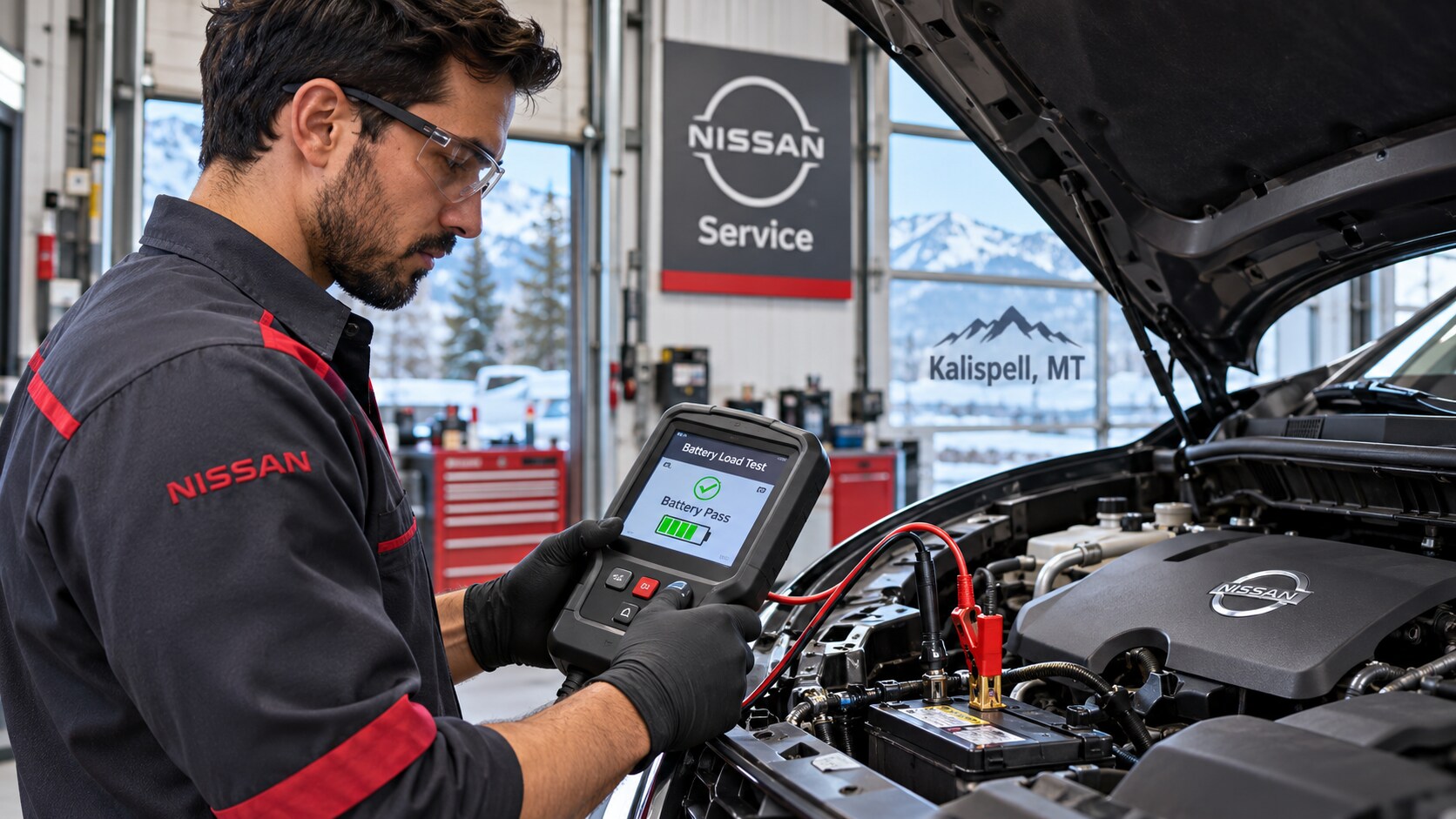
Battery, Wipers and Lights: The Cold-Weather Basics
A battery that starts your vehicle easily in September can fail on the first subzero morning. Cold reduces a battery's available power while making the engine harder to turn over, so an older battery can go from fine to dead without much warning. A quick load test shows how much life is left. If your battery is several years old, or you have noticed slow cranking, testing before winter is cheap insurance.
Wipers and washer fluid matter more than most people expect. Winter blades are built to resist ice buildup and keep the rubber flexible in the cold, and a washer fluid rated for low temperatures keeps spray from freezing on the glass. Road spray on the highway can blind you in seconds, so a full reservoir is part of safe winter driving.
Finally, walk around the vehicle and check every exterior light. Short winter days mean you drive with your headlights on far more often, and bulbs fade over time. Clean, working lights help you see and help other drivers see you on dark rural stretches.
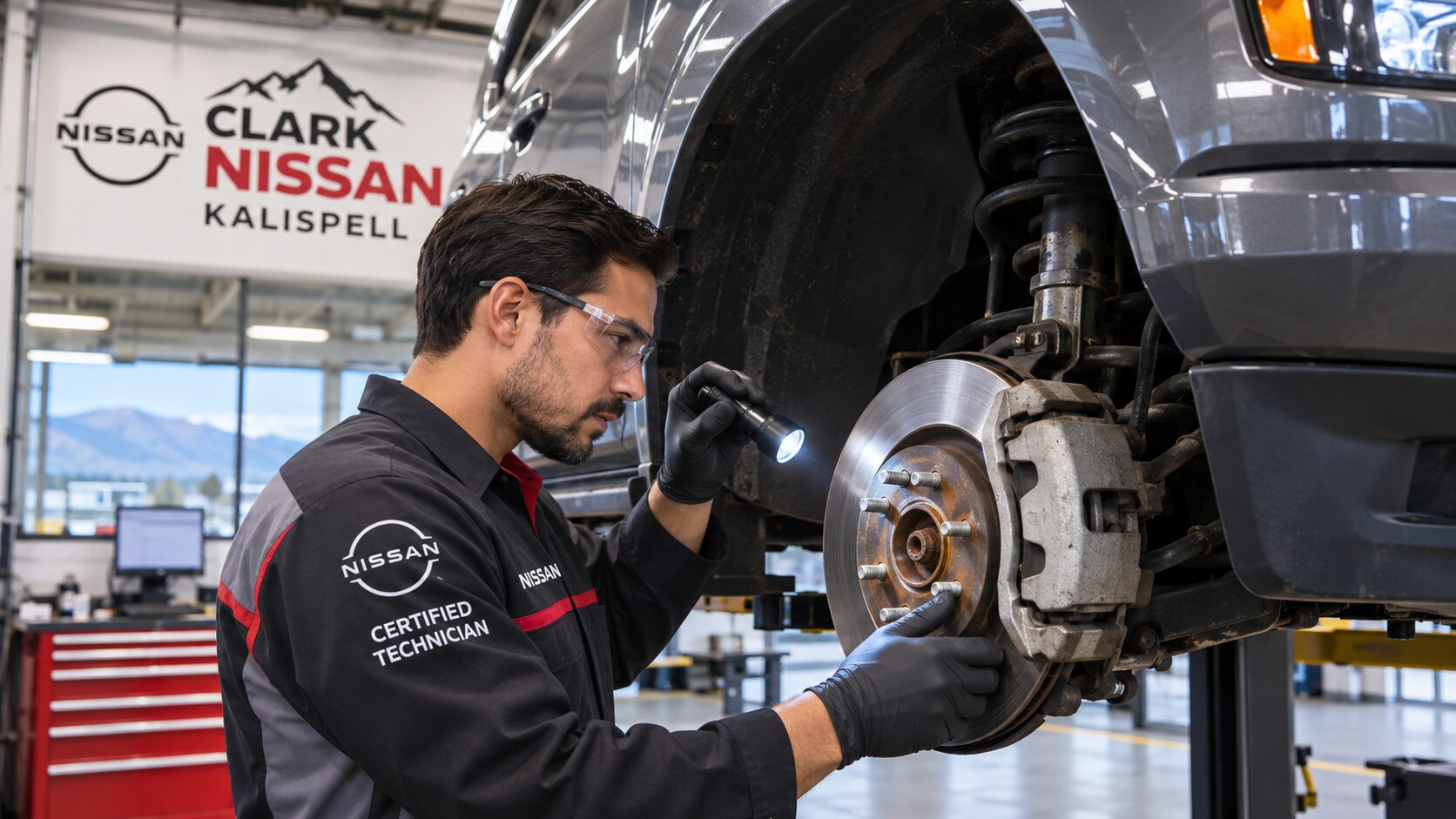
Brakes, Coolant and Your Emergency Kit
Winter is hard on brakes. Sand, gravel and road treatments can speed wear on pads, rotors and calipers, and moisture can lead to corrosion. If you hear grinding, feel vibration or notice a soft pedal, have the brakes inspected before conditions get worse. Brake fluid absorbs moisture over time, which is why your manual specifies a service interval.
Coolant protects against freezing as well as overheating. Your Nissan's cooling system should be filled with the coolant type and mixture your manual calls for, and a technician can test the protection level quickly. Also confirm that your oil grade matches the manual's cold-weather recommendation, and keep your fuel tank at least half full to reduce condensation and give you a margin if you are delayed.
Pack an emergency kit before you need it: a warm blanket, gloves, a hat, a flashlight with fresh batteries, a small shovel, an ice scraper, sand or traction aids, jumper cables, a phone charger, water and non-perishable snacks. If you drive past Hungry Horse or toward the Rocky Mountain Front, add extra layers and a printed map because cell coverage can be spotty.
- Brake pads, rotors and fluid
- Coolant strength and hoses
- Engine oil level and grade
- Tire pressure, including the spare
- Belts, wipers and all exterior lights
Your Winter Readiness Checklist at a Glance
Use this table as a quick reference before the first storm. It lists what to check, why it matters in the Flathead Valley, and when to act. These are general recommendations; your owner's manual and a service advisor have the final word for your vehicle.
Pick a calm weekend in October to run through the list at home, then book a service visit for the items that need a professional look. A short inspection now is much easier than a roadside breakdown in January.
| Item | What to check | Why it matters here | When to act |
|---|---|---|---|
| Tires | Tread depth, age, matching set, pressure | Packed snow and ice on US-93 and US-2 | Before the first snowfall; swap to winter tires in October |
| Battery | Load test, terminals, cranking speed | Subzero mornings and long rural drives | If the battery is several years old or cranks slowly |
| Brakes | Pads, rotors, fluid, pedal feel | Sand and road treatments increase wear | At the first noise, vibration or soft pedal |
| Wipers & washer fluid | Blade condition, winter-rated fluid | Road spray and short daylight | Replace at the start of the season |
| Coolant & oil | Protection level, grade, level | Cold starts and heater demand | Per your owner's manual schedule |
| Lights | Headlights, taillights, brake lights, signals | Dark commutes in winter | Replace dim or burned-out bulbs right away |
| Emergency kit | Blanket, shovel, flashlight, jumper cables | Long distances between help | Pack before November and restock each fall |
Recalls are another good item to check before winter. Enter your VIN on the NHTSA recall lookup to see whether any open safety recalls apply to your vehicle, then ask our service team to schedule any that do.
Before you drive, check conditions on the Montana Department of Transportation travel information page so you know what to expect on your route.
- Keep a basic checklist in the glove box and tick items off each fall.
- Take a photo of your tire's sidewall to record size and load rating.
- Ask for a written estimate and a priority ranking: safety-critical, soon, or can wait.
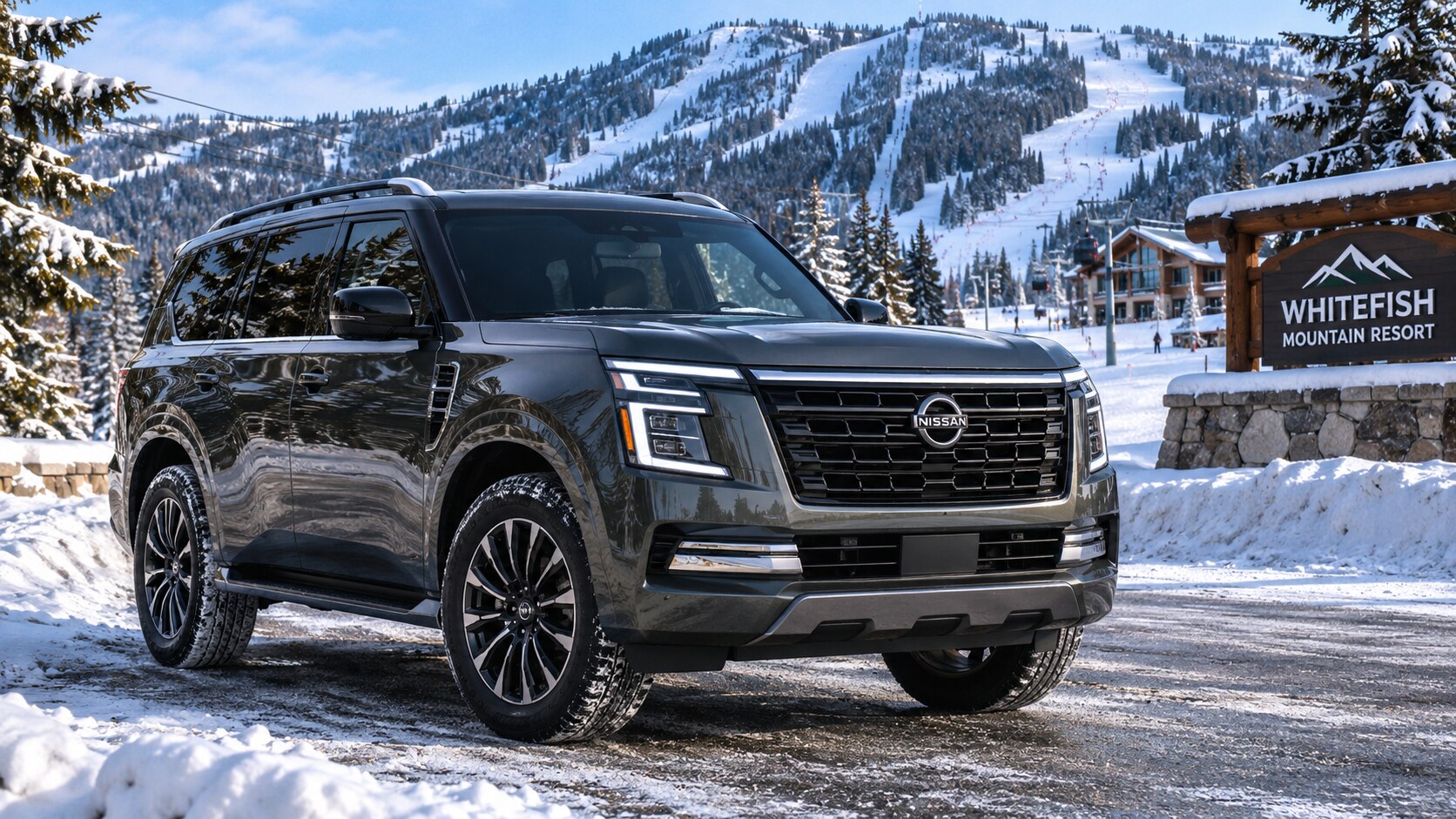
From Whitefish Mountain Resort to Flathead Lake: Winter Driving Around Here
Winter is a big reason many of us live here. Ski days at Whitefish Mountain Resort and Blacktail Mountain, snowmobile trips, ice fishing, and weekend runs toward Glacier National Park all start with a drive, and the drive home often happens after dark. Preparing your Nissan makes those trips more enjoyable and a lot less stressful.
If you commute from Columbia Falls to Kalispell, you know how quickly conditions can change along US-2. If you live in Bigfork or Lakeside, the shoreline of Flathead Lake brings its own wind and fog. Coram, Hungry Horse and West Glacier sit close to the mountains and can see heavier snow than the valley. Each of these drives rewards a vehicle with good tires, a healthy battery and brakes you can trust.
Many Flathead Valley households also run a second vehicle for work, hunting season or hauling. If a truck or SUV sits unused during summer, give it the same pre-winter attention: fresh battery test, fluids, and a check for leaks or rodent damage. Our team sees plenty of those vehicles in the fall.
Glacier National Park roads close for the season as snow arrives, so check the National Park Service conditions page before you plan a visit. Whatever your plans, a vehicle that is ready makes winter more fun.
Everything You Need at Clark Nissan Kalispell
Schedule service, order parts, shop new or pre-owned, or get a value on your trade. Pick what you need below and we will take it from there.
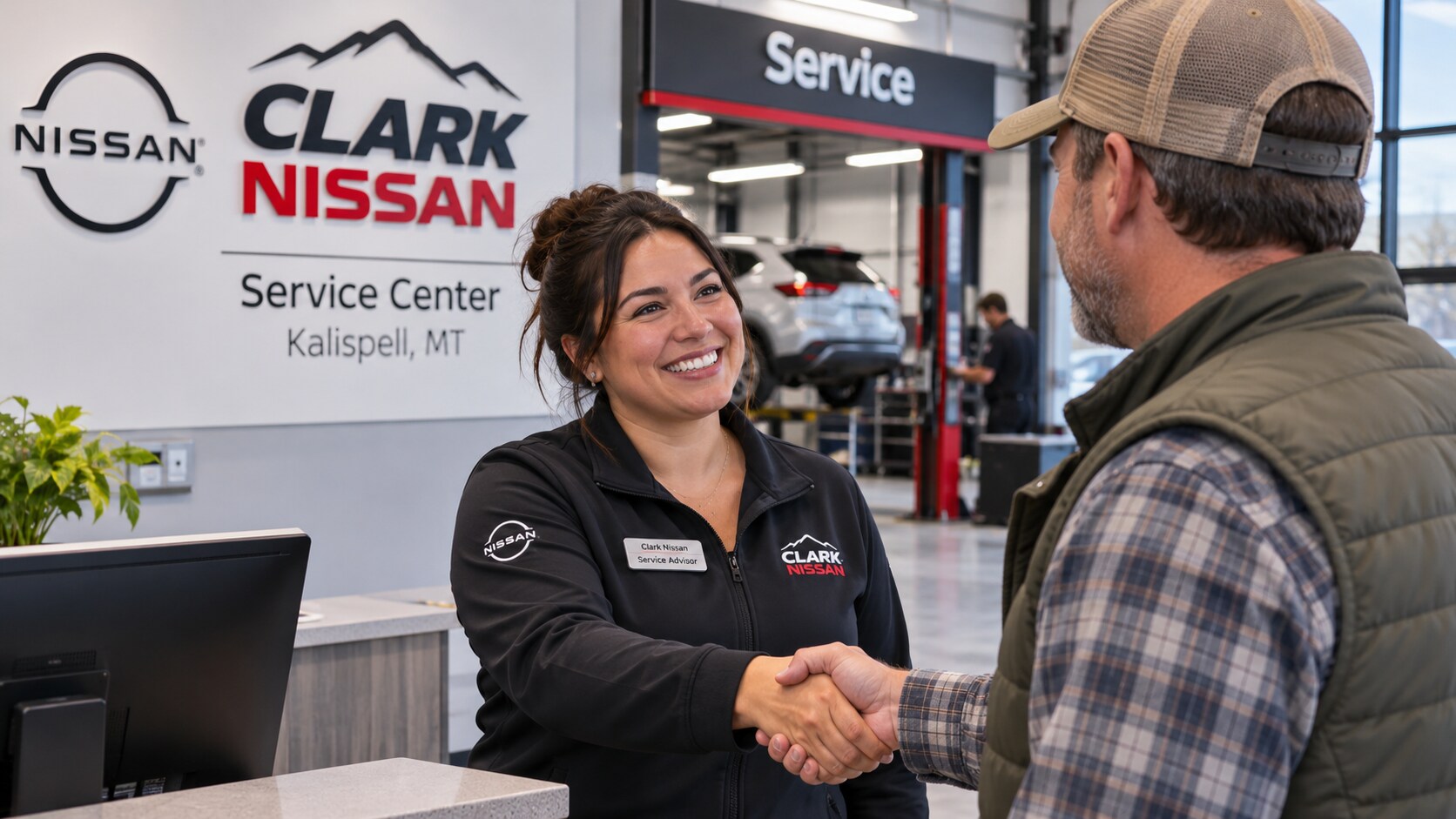
Service Built Around Montana Drivers
Clark Nissan Kalispell is a local dealership that understands what northwest Montana drivers ask of their vehicles. Our service team works on Nissans every day and can also help with other makes, so you can handle winter prep in a single stop.
We focus on clear communication. Our advisors explain what needs attention now, what can wait, and what the parts and labor involve before work begins. If you have questions about Nissan Genuine Parts, accessories or your maintenance schedule, ask.
If it turns out your current vehicle is not the right fit for the winters you face, we can also help with a trade-in or a pre-owned or new Nissan search. No pressure, just practical help.
Towns we serve across northwest Montana
- Kalispell
- Whitefish
- Columbia Falls
- Bigfork
- Evergreen
- Somers
- Lakeside
- Kila
- Marion
- Hungry Horse
- Coram
- West Glacier
- Polson
- Eureka
Winter Tires & Service FAQ
When should I switch to winter tires in Kalispell?
Many drivers in the Flathead Valley switch in October, before the first significant snowfall. A common rule of thumb is to switch when daytime temperatures consistently fall to around 45°F, because winter tire compounds work better in cold weather. Studded tires are legal in Montana from October 1 through May 31.
Do I need winter tires if I have all-wheel drive?
All-wheel drive helps with acceleration and getting moving on slick surfaces, but it does not help you stop or turn better than your tires allow. Winter tires improve braking and cornering traction in snow and ice, which is why many Montana drivers use them on AWD and 4x4 vehicles too.
Are studded tires worth it?
Studs can improve grip on ice, which may matter if you drive hilly or icy rural roads daily. They can be louder on dry pavement and wear faster on bare roads. Many valley drivers choose studless winter tires. Ask a service advisor which option fits your driving.
How do I know if my battery will last through winter?
A load test shows how much capacity your battery has left. Cold weather reduces battery power, so an older battery or one that cranks slowly is worth testing before the first deep freeze. Batteries commonly last three to five years, though results vary with climate and use.
What should I keep in my vehicle for winter driving in Montana?
A warm blanket, gloves and hat, flashlight, small shovel, ice scraper, traction aid such as sand, jumper cables, phone charger, water and snacks make a good basic kit. If you drive long rural distances, add extra layers and a printed map.
Can Clark Nissan service vehicles that are not Nissans?
Contact our service team to confirm which makes and models they can service and to schedule an appointment. You can also use the Schedule Service link on this page to get started.
How do I check for open recalls on my vehicle?
Enter your VIN on the NHTSA recall lookup at nhtsa.gov/recalls. If a recall is open, contact our service department to schedule the repair.
Get Winter-Ready at Clark Nissan Kalispell
Book your winter service visit, order parts, or ask about a vehicle that suits Montana winters better. We are here to help drivers from Whitefish to Bigfork get where they are going safely.
* This page is general information, not a substitute for your owner's manual or professional inspection. Service recommendations and intervals vary by vehicle, driving conditions and component age. Prices, offers and availability are determined by the dealer and subject to change.
¹ Tire pressure typically falls about 1 psi for every 10°F drop in temperature; check pressure with a gauge when tires are cold and inflate to the placard value in your vehicle.
² Battery life varies with climate, vehicle use and battery type; testing is recommended as the battery ages.
³ Tread wear bars indicate the minimum legally usable tread depth in most states; many drivers choose to replace winter tires well before reaching that point for better snow traction. Confirm current Montana requirements with the Montana Department of Transportation.
Studded tire dates reflect Montana state guidance at the time of writing; confirm at mdt.mt.gov or with your tire provider before installing studs.